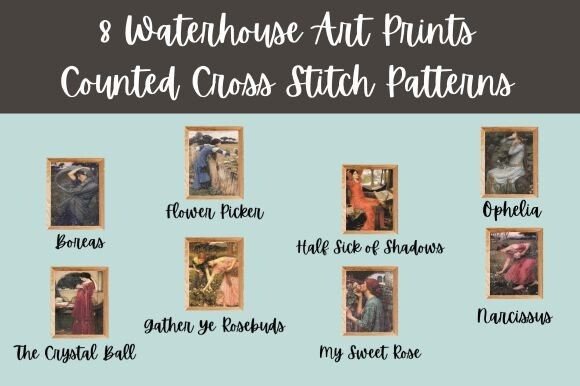
8 Waterhouse Cross Stitch Patterns Review
As a professional embroidery designer specializing in commercial merchandise and branded assets, I approach every new design collection with a critical eye toward production viability. When evaluating the 8 Waterhouse Cross Stitch Patterns, my primary focus is not just aesthetic beauty, but how these graphics translate into tangible business value. For small business owners, Etsy sellers, and apparel decorators, this set of counted cross stitch patterns offers a unique opportunity to merge classical artistry with modern branding. However, moving from a printable PDF to a finished embroidered patch or custom apparel requires careful technical consideration.
First Impressions: Elegance Meets Commercial Viability
Upon reviewing the 8 Waterhouse Cross Stitch Patterns, the immediate impression is one of refined elegance and romantic complexity. John William Waterhouse’s art is renowned for its ethereal quality, and these digital embroidery files capture that essence through intricate detailing. From a branding perspective, this collection feels premium, classic, and distinctly handmade. It avoids the generic look of mass-produced clip art, offering instead a sophisticated visual language that speaks to customers who value craftsmanship.
For a boutique, florist, or creative studio, this aesthetic aligns perfectly with a brand identity rooted in heritage and quality. The designs do not feel playful or overly modern; rather, they possess a timeless weight that can elevate the perceived value of any merchandise. As graphics, they are rich in narrative, making them excellent conversation starters on tote bags or framed hoop art sold in gift shops. However, because they originate as counted cross stitch patterns, the digitization style will inherently feature a grid-like texture that differs from standard satin or fill stitch machine embroidery designs. This distinction is vital for setting customer expectations regarding the final product's tactile feel.
Real-World Applications for Small Business Merch
In my experience outfitting creative businesses, the versatility of these patterns depends heavily on scale and application. Here is how the 8 Waterhouse Cross Stitch Patterns perform across various commercial embroidery projects:
- Boutique Tote Bag Design: This is perhaps the strongest use case. The larger canvas of a cotton tote allows for the full detail of Waterhouse’s compositions without compromising clarity. The cross-stitch texture adds an artisanal touch that complements eco-friendly packaging and sustainable brand values.
- Apron Embroidery for Cafés and Florists: Placing a smaller, cropped motif on the chest pocket of a linen apron creates a subtle yet high-end uniform accent. The organic themes often found in Waterhouse’s work pair naturally with botanical shops and bakeries.
- Etsy Branding and Packaging: Beyond wearable merch, these graphics serve as exceptional design assets for thank-you cards or fabric labels. Using a simplified version of the pattern as a stamped logo or woven label reinforces a cohesive handmade product line.
- Custom Apparel Accents: For work shirts or smocks, using these patterns as sleeve details or back yoke embroidery adds personality without overwhelming the garment’s function. It signals to clients that the business pays attention to artistic detail.
Technical Constraints and Production Warnings
While visually stunning, applying 8 Waterhouse Cross Stitch Patterns to commercial goods requires navigating specific technical hurdles. As an embroidery designer, I must caution against assuming these PDF patterns are ready-to-run machine files. They likely require redigitizing or specialized conversion to function as a true machine embroidery design.
Navigating Stitch Density and Fabric Texture
Cross stitch emulation in machine embroidery creates high stitch density. On lightweight fabrics like performance tees or thin cap fronts, this can cause puckering or distortion. Always test on the actual fabric texture intended for production. Heavyweight canvas, denim, or twill are ideal substrates that support the structural integrity of these dense graphics. If you plan to use these for cap embroidery, be aware that the curved surface and limited flat area may distort the geometric precision required for cross stitch aesthetics. Caps generally favor simpler, less dense logos.
Sizing and Detail Retention
Waterhouse’s art is famous for fine details. Reducing these patterns to a 2-inch patch size will result in lost definition and thread breaks. For small patches or chest logos, you must simplify the design assets significantly. Crop to a focal point—a face, a flower, or a hand—rather than attempting to shrink the entire scene. Tiny lettering within these artistic frames should be avoided entirely unless enlarged substantially. Always verify the minimum viable hoop size before committing to a production run.
Impact on Brand Identity and Customer Trust
Integrating fine art into commercial embroidery signals a commitment to quality. When customers see 8 Waterhouse Cross Stitch Patterns executed well on a finished product, it builds trust in the maker’s skill. It differentiates a handmade product from factory-made alternatives. However, poor execution—such as misaligned stitches or inappropriate stabilizer choices—can have the opposite effect, making the brand appear amateurish.
Consistency is key. If you choose this collection for your brand identity, ensure it aligns with your other visual elements. The romantic, pre-Raphaelite style works best for businesses with warm, organic, or vintage-leaning palettes. It may clash with stark minimalist or tech-forward branding. Use these graphics to tell a story that resonates with your specific niche, enhancing buyer engagement through emotional connection rather than mere decoration.
Essential Designer Notes for Production Success
Before loading these designs into your machine for client orders or inventory, follow this professional checklist to ensure commercial-grade results:
- Verify Licensing: Confirm that the 8 Waterhouse Cross Stitch Patterns include commercial usage rights for physical merchandise. Copyright laws regarding fine art adaptations are strict; never assume personal-use licenses cover sales.
- Create Printable Mockups: Before stitching, generate a printable mockup at actual size. Place it on the garment or item to visualize placement and proportion. Digital screens often deceive the eye regarding scale.
- Test in Black and White: Run a grayscale test stitch-out first. This reveals whether the design relies too heavily on color contrast to define shapes. A strong design must read clearly even without thread colors.
- Stabilizer Selection: Due to the nature of cross stitch emulation, use a firm cut-away stabilizer for stretchy fabrics and a tear-away for stable wovens. Consider a water-soluble topping for textured fabrics to prevent stitches from sinking.
- Thread Color Contrast: Waterhouse’s palette is often muted. Ensure your thread colors have sufficient contrast against the base fabric. Test on dark uniforms specifically, as you may need to add an underlay or outline to make the design pop.
- Compare Beside Other Assets: Lay the stitched sample next to your existing logo and tags. Ensure the visual weight matches. You want a harmonious collection, not a disjointed mix of styles.
The 8 Waterhouse Cross Stitch Patterns offer a remarkable foundation for distinctive, high-value merchandise. By respecting the technical demands of translating counted cross stitch into commercial embroidery, small businesses can create products that are as durable as they are beautiful. Always prioritize testing and proper digitization to honor both the art and your brand reputation.