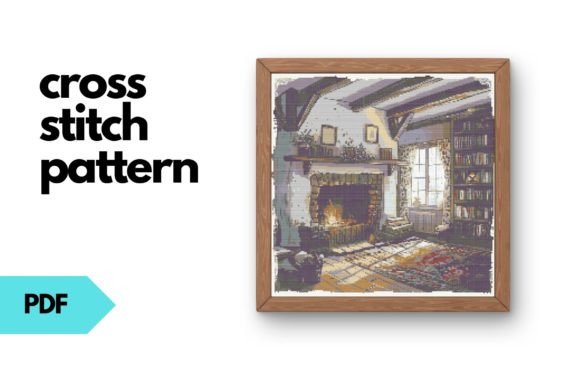
Cozy Fireplace Cross Stitch Pattern Review
As a professional embroidery designer specializing in commercial merchandise and branded assets, I approach every new graphic with a critical eye toward production viability. When evaluating the Cozy Fireplace Cross Stitch Pattern for small business use, my primary focus shifts from simple aesthetics to functional application. This design, specified at a canvas size of 200 x 200 stitches, presents a unique opportunity for handmade brands, cafés, and boutique owners looking to infuse their merchandise with warmth and artisanal charm. However, translating a cross-stitch chart into a viable machine embroidery design or hand-stitched product requires careful consideration of density, scale, and brand alignment.
Visual Personality and Brand Alignment
The first impression of the Cozy Fireplace Cross Stitch Pattern is undeniably rustic and inviting. In the context of brand identity, this graphic communicates comfort, tradition, and domestic warmth. For a local bakery, a florist, a pet brand, or a winter-themed pop-up shop, this visual language aligns perfectly with customer expectations of a "homey" experience. Unlike sleek, corporate vector logos, this pattern leverages the inherent texture of Cross Stitch Patterns to signal that a business values craftsmanship and slow living.
However, for businesses aiming for a high-tech or ultra-modern aesthetic, this design may create cognitive dissonance. The pixelated nature of cross-stitch graphics inherently suggests a handmade product. If your business sells precision engineering or clinical skincare, this warmth might undermine your professional positioning. Conversely, for Etsy sellers, creative studios, and heritage-style apparel decorators, this pattern serves as an excellent anchor for visual consistency across seasonal collections.
Commercial Applications for Small Business Merch
The versatility of this 200 x 200 stitch grid makes it a strong candidate for various small business merch applications. Because the design is square and balanced, it adapts well to centered placements without requiring extensive re-digitizing for layout purposes.
- Apron Embroidery: This is perhaps the strongest use case. A fireplace motif on a barista apron or baker’s uniform reinforces the cozy atmosphere of a café. The 200-stitch width provides enough detail to be recognizable on heavy canvas fabrics without becoming overwhelming.
- Tote Bag Design: Natural cotton totes are ideal substrates for cross-stitch aesthetics. The design can serve as a central feature or a repeating border element. For retail shops, these bags function as walking advertisements that feel like gifts rather than billboards.
- Embroidered Patches: Creating iron-on or sew-on patches allows businesses to sell branded accessories separately. The defined edges typical of cross-stitch charts translate cleanly into merrowed borders, making the finished product look intentional and premium.
- Product Packaging Accents: Beyond apparel, consider stitching this motif onto linen drawstring bags for jewelry or soap. It elevates the unboxing experience and justifies a higher price point through perceived value.
Production Constraints and Technical Considerations
While the Cozy Fireplace Cross Stitch Pattern is charming, technical limitations must be respected during production. A 200 x 200 stitch count is relatively compact. In machine embroidery terms, depending on your digitized stitch length, this could result in a physical size between 1.5 and 2 inches square. This compact footprint dictates where the design can safely live.
Stitch Density and Fabric Texture
Cross-stitch conversion often results in high stitch density. If you are converting this chart into a digital embroidery file, ensure your digitizer uses appropriate underlay to prevent puckering on lighter fabrics. On textured surfaces like terry cloth or nubby linen, the small "x" shapes may get lost. I recommend testing on a smooth, tight-weave fabric first. If using the pattern for hand embroidery on merchandise, verify that the chosen Aida or evenweave count matches the desired final size; otherwise, the fireplace details may become too minute for customers to appreciate from a conversational distance.
Cap Embroidery and Curved Surfaces
Use caution when applying this design to caps. The rigid structure of a hat front combined with the dense saturation of a cross-stitch motif can cause registration issues. If pursuing cap embroidery, test the design on a flat brim or a low-profile unstructured cap first. The 200 x 200 grid is generally safe for the center front, but avoid wrapping the design over the seam or visor edge, as the geometric precision will distort.
Thread Colors and Contrast
The provided PDF includes both color/symbol and black-and-white versions. For commercial use, always review the thread colors against your actual garment inventory. A warm orange fireplace thread might vibrate unpleasantly against a bright red uniform shirt. Utilize the black-and-white symbol chart to assess value contrast independent of hue. If the design relies heavily on shading to define the fireplace mantle, ensure those tonal shifts remain visible when stitched on dark navy or charcoal custom apparel. You may need to add a light outline or increase brightness in the digitizing software to maintain legibility.
Designer Notes for Professional Execution
To ensure the Cozy Fireplace Cross Stitch Pattern meets professional standards, follow this pre-production checklist. These steps distinguish amateur hobbyists from serious commercial embroidery operations.
- Verify Licensing: Before listing any merchandise, confirm the specific commercial usage rights included with your instant download. Not all Graphics allow for unlimited resale of embroidered goods.
- Create a Printable Mockup: Do not guess at placement. Print the pattern at actual size and tape it to the garment. Photograph this printable mockup to visualize scale relative to pockets, seams, and collars. Get client approval on placement before hooping expensive inventory.
- Test Stabilizer Pairings: The 200 x 200 stitch area is dense. Run a test stitch-out using your intended stabilizer setup. If the fabric tunnels, switch to a heavier cutaway or add a topping. Proper stabilization is non-negotiable for crisp cross-stitch definition.
- Check Hoop Size Compatibility: While the design is small, ensure your hoop size allows for adequate margin around the design area. Tight hooping near the edges of a small design can cause tension inconsistencies.
- Evaluate Wash Fastness: If this design is for staff uniforms or frequent-use tote bags, test wash durability. Cross-stitch textures can snag. Ensure top stitching or proper finishing is applied if the item will undergo industrial laundering.
- Compare Beside Other Assets: Place this pattern next to your existing logo and typography. Does the weight match? If your text logo is thin and modern, the chunky cross-stitch might overpower it. Adjust sizing or spacing to maintain visual hierarchy among your design assets.
Impact on Customer Trust and Product Value
Ultimately, integrating the Cozy Fireplace Cross Stitch Pattern into your product line is a strategic decision about emotional connection. In an era of mass production, visible stitch work signals human involvement. For small businesses, this translates directly to trust. Customers associate the time-intensive nature of cross-stitch with quality and care. When they see this motif on an embroidered patch or apron, they subconsciously attribute those same qualities to your coffee, flowers, or handmade goods.
However, execution matters. A poorly stabilized, distorted, or illegible design damages credibility faster than no branding at all. By respecting the technical parameters of the 200 x 200 stitch canvas and validating the design through rigorous testing, you transform a simple digital download into a powerful asset for brand identity. Whether used as a subtle sleeve detail or a bold tote bag centerpiece, this pattern offers a tangible way to make your business feel like a welcoming hearth for your community.