Pearly Blue Flowers Embroidery Patterns Review
As a professional embroidery designer specializing in commercial branding and merchandise, I approach every new asset with a critical eye. When evaluating Pearly Blue Flowers Embroidery Patterns for small business use, my primary concern is not just aesthetic beauty, but production viability. This digital paper collection offers high-resolution graphics that serve as an excellent foundation for digitizing, but translating a 300 DPI JPG into a functional machine embroidery design requires careful consideration of stitch physics and brand application.
Visual Personality and Brand Alignment
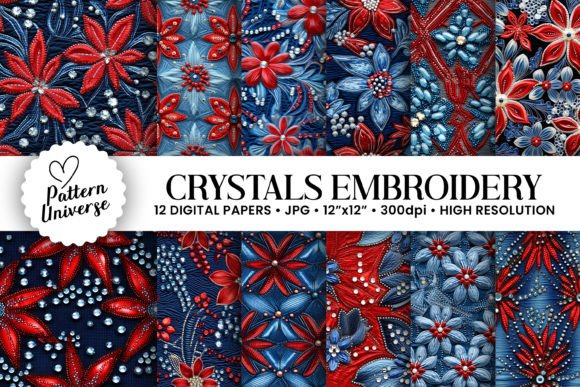
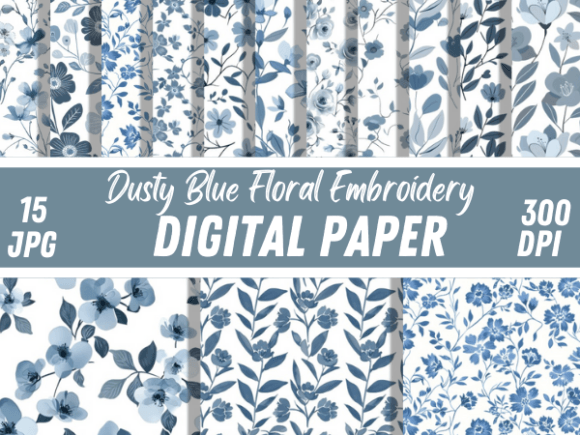
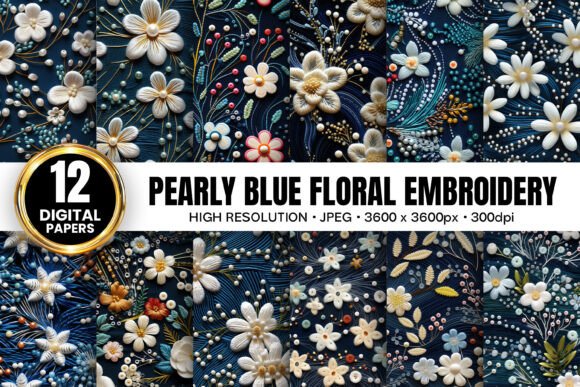
The first impression of Pearly Blue Flowers Embroidery Patterns is one of refined elegance mixed with organic softness. The color palette suggests a premium, boutique feel rather than a utilitarian industrial look. For small business owners, this visual tone is crucial. It communicates trust, attention to detail, and a handmade quality that mass-produced clip art often lacks.
In my experience designing for creative studios, florists, bakeries, and pet brands, this specific aesthetic bridges the gap between vintage charm and modern professionalism. It avoids being overly cutesy, which makes it suitable for adult-oriented merchandise like staff uniforms or high-end tote bags. However, because these are raster graphics and not pre-digitized files, they act as a blueprint. The "pearly" aspect implies shading and gradients that must be interpreted carefully during the digitization process to avoid a muddy or overly dense final product.
Real-World Applications for Small Business Merch
When integrating these patterns into a commercial workflow, versatility is key. Here is how I evaluate Pearly Blue Flowers Embroidery Patterns across different branded touchpoints:
- Boutique Aprons and Staff Uniforms: The floral motif works exceptionally well as a chest logo accent or a hem detail on linen aprons. For cafes and bakeries, this adds a layer of cohesive brand identity without overwhelming the uniform's functionality.
- Tote Bag Design: Canvas totes provide a stable base for these flowers. The 12″ source resolution allows for a substantial center placement or a repeating border pattern. This is ideal for customer gifts or retail add-ons where the finished product needs to look intentional and high-value.
- Embroidered Patches: These designs translate beautifully into merrowed-edge patches for hats or jackets. The distinct shapes allow for clean satin stitch borders, provided the digitizer simplifies the internal shading to keep stitch density manageable.
- Product Packaging Accents: Beyond apparel, these graphics can be embroidered onto fabric tags or drawstring pouches for jewelry and candle businesses, elevating the unboxing experience.
Production Constraints and Technical Considerations
While the artistic value is high, technical limitations exist when moving from digital paper to needle and thread. As an experienced designer, I must highlight where caution is necessary to prevent production failures.
Navigating Stitch Density and Fabric Texture
The most significant challenge with adapting Pearly Blue Flowers Embroidery Patterns is managing density. Floral designs with "pearly" shading often tempt digitizers to use excessive fill stitches to replicate the gradient. On lightweight fabrics like performance tees or thin cotton, this leads to puckering and distortion. You must prioritize structural integrity over pixel-perfect replication. Using proper stabilizer is non-negotiable here; a cut-away backing is likely required for any garment application to support the weight of the floral elements.
Size Limitations on Caps and Small Patches
These patterns feature intricate details that may get lost at small scales. For cap embroidery, the curved surface limits your usable area. If you attempt to shrink these complex flowers below 2 inches, the definition will vanish, resulting in a blob of thread. Similarly, tiny lettering integrated into these floral arrangements must be simplified or removed entirely. Always test the design at the intended physical size before committing to bulk production. What looks crisp at 3600 pixels can become illegible at 1 inch of stitching.
Impact on Brand Value and Customer Perception
Investing in quality design assets like Pearly Blue Flowers Embroidery Patterns directly influences perceived value. In the competitive landscape of Etsy sellers and local makers, generic clipart signals "amateur," while thoughtfully adapted embroidery signals "artisan."
When a customer receives a handmade product featuring a well-executed floral emblem, it reinforces the price point. It suggests that the business owner cares about the tactile experience, not just the visual one. Furthermore, consistent use of these specific blue tones across various media—from your website banner to your staff’s embroidered polos—builds visual recognition. This consistency fosters trust; customers subconsciously associate the polished presentation with reliable service and product quality.
Professional Designer Notes for Implementation
Before you send these files to a digitizer or begin tracing them yourself, follow this professional checklist to ensure commercial success:
- Verify Commercial Licensing: The product description lists file specs but does not explicitly state commercial usage rights for finished goods. Before selling merchandise featuring Pearly Blue Flowers Embroidery Patterns, confirm you have the appropriate license for commercial embroidery.
- Create a Printable Mockup: Utilize the 300 DPI JPGs to create realistic mockups for client approval. This helps visualize scale and placement on aprons or caps before a single stitch is sewn, saving time and materials.
- Test in Black and White: Print the pattern in grayscale to check contrast. If the flower petals blend into the leaves without color, the digitized version will lack depth. Adjust the artwork or plan for distinct thread colors to define edges.
- Check Hoop Size Compatibility: At 12 inches, the source image is large, but your machine has limits. Determine if you need to resize or split the design for your specific hoop size. Never assume a 12″ graphic fits a standard 5x7 hoop without modification.
- Fabric Testing is Mandatory: Run a sew-out on the exact fabric you intend to use for the final run. Linen behaves differently than denim. Adjust pull compensation and underlay based on the test results to ensure the Pearly Blue Flowers remain true to shape after washing.
- Simplify for Durability: If these items will be washed frequently (like café aprons), reduce fine detail. Optimize the embroidery file for longevity rather than photorealism. A slightly stylized flower lasts longer than a hyper-detailed one.
Evaluating the Asset for Business Growth
Pearly Blue Flowers Embroidery Patterns represent a strong starting point for businesses seeking a softer, more organic brand aesthetic. The high resolution ensures that whether you are creating a large back piece for a work shirt or a delicate label for a jar cozy, the source material holds up. However, the transition from digital graphic to tangible merchandise requires respecting the medium of embroidery.
Success lies in adaptation. By treating these patterns as inspiration rather than rigid templates, and by adhering to technical best practices regarding density and stabilization, small business owners can transform these lovely graphics into profitable, professional-grade merchandise. Always remember that in custom apparel and branding, the quality of the execution matters just as much as the beauty of the original design. Use these assets wisely, test thoroughly, and let the unique character of these pearly blue flowers enhance your brand's story through the timeless medium of embroidery.