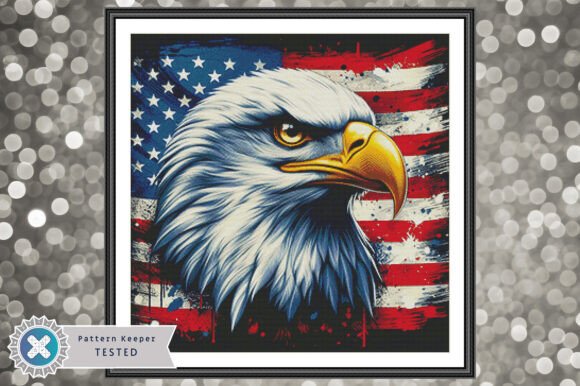
American Flag Eagle Cross Stitch Pattern Review
As an embroidery designer preparing for the upcoming weekend craft fair season, I approach every new design with a critical eye toward production viability and shelf appeal. When evaluating the American Flag Eagle Cross Stitch Pattern, my immediate assessment focuses on its potential as a high-impact anchor piece for handmade market tables. This is not a subtle accent design; it is a bold, patriotic statement that demands attention. For Etsy sellers, boutique makers, and creative entrepreneurs, understanding the specific commercial applications of this full coverage pattern is essential for maximizing return on investment at markets and online.
First Impressions: Bold Patriotism Meets Traditional Craft
The first impression of the American Flag Eagle Cross Stitch Pattern is undeniably commanding. It strikes a balance between rustic Americana and premium traditional needlework. Unlike minimalist line art or modern abstract graphics, this design carries a sense of heritage and weight. For a craft fair booth, this visual gravity is necessary to stop foot traffic. The combination of the eagle and flag motifs suggests a product that appeals to customers looking for heirloom-quality decor rather than disposable trends. However, because it utilizes 45 DMC thread colors, the visual complexity is high. In person, this translates to rich texture and depth that photographs often fail to capture fully. As a designer, I see this as a "showstopper" item that elevates the perceived value of surrounding inventory, signaling to buyers that your shop specializes in serious, skilled craftsmanship.
Evaluating Product Viability for Market Sales
When translating digital Cross Stitch Patterns into physical goods, size dictates utility. With dimensions of 300w x 300h stitches, this design finishes at approximately 21.5 inches square on 14-count fabric or 18.8 inches square on 16-count fabric. These measurements immediately rule out small accessories like caps, patches, or fabric pouches. Attempting to shrink a full coverage design of this magnitude would destroy the detail and result in a muddy, unrecognizable image. Instead, we must focus on large-format applications where the design can breathe.
Pillow Covers and Wall Hangings
The most commercially viable application for this specific stitch count is decorative home textiles. A finished 18-to-21-inch square fits perfectly within standard pillow form sizes when accounting for seam allowances. For a handmade market display, embroidered pillow covers serve as excellent vertical merchandising opportunities. They allow customers to visualize the American Flag Eagle Cross Stitch Pattern in a domestic setting. Similarly, framing the finished piece as wall art creates a premium price point product. The sheer number of thread colors ensures the eagle’s feathers and flag folds have enough definition to justify a higher cost compared to simpler prints.
Tote Bags and Market Banners
While apron embroidery and tea towel embroidery are popular categories, the scale of this design makes it challenging for standard kitchen linens unless you are working with oversized bakery aprons or flour sack towels. However, heavy canvas tote bags or market banners are ideal substrates. A large patriotic tote bag featuring this design acts as a walking advertisement at outdoor festivals. The density of full coverage cross stitch provides durability against wear, provided the stabilizer and fabric weight are adequate. For digital sellers offering printable mockups, showcasing this design on a natural canvas background will likely yield higher click-through rates than on white linen, as the contrast enhances the 45-color palette.
Production Realities and Technical Considerations
For experienced stitchers and business owners, time is money. Full coverage patterns are labor-intensive investments. Before committing to batch production, you must evaluate the practical selling points. The American Flag Eagle Cross Stitch Pattern requires significant hoop time or hand-stitching hours. This affects pricing strategy significantly. You cannot price this item based on material costs alone; the value lies in the execution of complex color blending.
- Stitch Density and Fabric Choice: Full coverage means no visible fabric grid. On 14-count Aida, the result is dense and durable, suitable for items that may be handled frequently. On 16-count linen or evenweave, the finish is more refined and elegant but takes longer to complete. Choose your fabric based on your target demographic's preference for rustic versus refined aesthetics.
- Thread Management: Managing 45 DMC threads requires meticulous organization. For commercial embroidery businesses adapting this concept to machine embroidery design formats, note that digitizing a cross stitch look of this size involves massive stitch counts. Always verify if you are selling the physical stitched good or the digital embroidery file, as licensing differs.
- Visual Clarity at Scale: Because this is a large graphic, ensure your lighting at the craft fair highlights the texture. Flat lighting washes out cross stitch. Use angled spotlights to create shadows in the stitches, emphasizing the three-dimensional quality of the eagle and flag elements.
Critical Use Notes for Professional Finish
Even experienced makers encounter pitfalls with complex graphics. When producing the American Flag Eagle Cross Stitch Pattern for sale, pay close attention to tension and stabilization. Full coverage designs can distort fabric if hooped improperly. If stitching by hand, use a frame rather than a hoop to maintain even tension across the 21-inch span. Distortion is unacceptable in a premium handmade product and will deter discerning buyers.
Additionally, consider the colorfastness of your threads. Patriotic designs often rely on vibrant reds and deep blues. Ensure you are using high-quality, colorfast DMC floss to prevent bleeding during future washing by the customer. Include care instructions with every sold item. For those considering machine embroidery adaptations, be wary of push-pull distortion on curved surfaces. This design is strictly flat-work; do not attempt to place this large, dense graphic on caps or curved bags without extensive testing and specialized stabilizers, as the registration will likely fail.
Strategic Display and Buyer Engagement
In a crowded market booth, the American Flag Eagle Cross Stitch Pattern should function as a backdrop or centerpiece. Its large size makes it perfect for hanging behind your table to draw eyes from a distance. Pair it with smaller, complementary items in coordinating red, white, and blue tones to create a cohesive collection. This encourages bundle purchasing. When listing online, use high-resolution macro shots to show the intersection of stitches. Buyers need to verify the neatness of your work before investing in a large piece. Mention the exact finished size prominently in your description to manage expectations regarding scale.
Designer Checklist Before Production
Before cutting fabric or threading needles for commercial inventory, run through this professional checklist to ensure brand consistency and quality:
- Create a Physical Mockup: Never rely solely on digital previews. Stitch a test section to verify thread contrast and fabric compatibility.
- Verify Licensing: Confirm whether the pattern source allows for the sale of finished physical products versus just personal use. Commercial rights are non-negotiable for business owners.
- Check Thread Inventory: With 45 colors, running out of a key shade mid-production causes dye-lot mismatches. Purchase all required skeins upfront.
- Assess Pricing Model: Calculate hours spent versus profit margin. If the ROI is too low for a finished product, consider selling the kit or pattern instead.
- Test Photography Setup: Photograph the sample in natural light to ensure the reds and blues are accurate. Color correction is vital for patriotic themes.
Ultimately, the American Flag Eagle Cross Stitch Pattern represents a significant opportunity for makers who specialize in detailed, traditional needlework. By respecting the scale and complexity of the design, and applying strategic product selection, this pattern can become a signature offering that defines your brand’s quality and attracts loyal customers at fairs and online marketplaces.